BRICS New Delhi Declaration: Building for Resilience, Innovation, Cooperation, and Sustainability

Earlier this month, the leaders of BRICS convened for their annual summit hosted in New Delhi. The gathering brought together the recently expanded 11-member bloc alongside 10 newly designated partner countries. The major deliverable of the summit was aptly titled the “New Delhi Declaration,” a 140-paragraph directive anchored by the summit’s theme “Building for Resilience, Innovation, Cooperation and Sustainability.”
This year’s coalition highlights BRICS’ evolved position as a maturing institution advancing economic autonomy, technological sovereignty, and reformed multilateralism. As observed by the European Policy Centre, the core challenge of the summit was managing the group’s rapid expansion while maintaining cohesion.
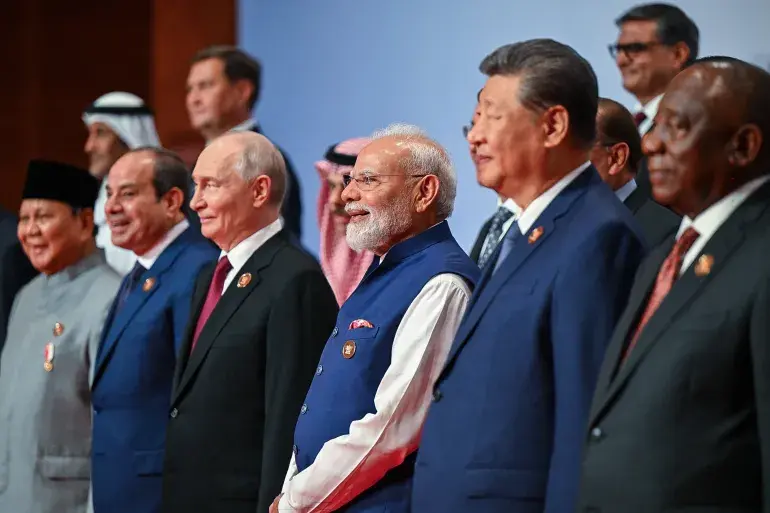
The Declaration
In short, the declaration serves as a collective blueprint for the Global South’s future. The declaration covers 4 core areas of contention: financial autonomy; multilateralism; technology and AI governance; security and conflict resolution.
Financial Autonomy
A central pillar of the New Delhi Declaration is its focus on strengthening financial autonomy and reducing vulnerabilities. Rather than pursuing a rapid abandonment of global reserve currencies, the declaration outlines pragmatic, infrastructure-led initiatives designed to shield member economies from external financial shocks.
Member States are now committed to expanding the use of national currencies in trade. By settling transactions directly in local currencies, member nations aim to lower exchange-rate friction, minimize transaction costs, and insulate regional trade flows from global fluctuations. This will be mediated through the BRICS Payment Task Force who aims to establish independent yet well-connected channels for cross-border clearing.
Multilateralism
As international politics progressed post-World War II, the Declaration recognizes the importance of reform. Rather than advocating for the dismantling of international bodies, the declaration frames BRICS as a constructive catalyst for reformed multilateralism through inclusion, democracy, and accountability. To achieve this, BRICS calls upon the UN to reform with a primary focus on expanding the UN Security Council. The document explicitly advocates for increased representation for developing nations across Africa, Asia, and Latin America.
The text reaffirms the bloc’s commitment to a rule-based, open, and non-discriminatory multilateral trading system with the World Trade Organization at its core. BRICS leaders collectively condemned unilateral protectionist trade measures, arbitrary tariffs, and coercive economic policies, arguing that such actions erode global trust.
Technology and AI Governance
At the forefront of the summit’s agenda was the development of AI and Digital Public Infrastructure. Formalizing the BRICS Leaders’ Statement on the Global Governance of AI, the declaration calls for wider global access to AI compute, open-source data, and technology resources. The bloc commits to fostering trustworthy, transparent AI that drives innovation. Crucially, leaders warned against dataset biases and the “misappropriation of knowledge, heritage, and cultural values,” in AI training models.
Drawing heavily on India’s successful rollout of open-source stack models, the text highlights the transformative power or interoperable Digital Public Infrastructure to deliver public services at scale. The document proposes establishing a BRICS DPI Repository to facilitate pilot projects, cross border technical exchange, and digital capacity building across member states emphasizing “digital self-reliance.”
Security and Conflict Resolution
The Declaration establishes a principled framework for conflict resolution anchored in international law and diplomatic mediation. Despite the expanded bloc’s diverse geopolitical alignments, leaders forged a rare unanimous consensus on pressing regional security challenges and counter-terrorism measures. The text rejected any “double standards” in countering violence and called for coordinated global action to dismantle terror financing channels, restrict the cross-border movement of extremists, and eliminate safe havens. Furthermore, members urged the finalization and adoption of the Comprehensive Convention on International Terrorism.
Reaffirming commitment to the principles of the UN Charter, the Declaration emphasized that peaceful dialogue, consultation, and multilateral diplomacy are the sole viable paths for resolving international disputes. In tandem, the text reiterated that the UN Security Council holds exclusive authority to impose international sanctions, explicitly rejecting non-UN sanctioned unilateral coercive measures that disrupt global supply chains and harm civilian populations.
Far from a passive assembly, the 11-member alliance demonstrated its ability to translate the diverse priorities of the Global South into a coherent, actionable agenda.
Sources:
Ministry of External Affairs, Government of India. 2026. "BRICS New Delhi Declaration: Building for Resilience, Innovation, Cooperation and Sustainability (September 12, 2026) September 12. Link
Policy Circle. 2026. "BRICS 2026 reveals ambition contradictions and uncertain future" September 22. Link
The Diplomat. 2026 "The New Delhi BRICS Summit Sends Powerful Messages to America" Septmeber 16. Link