Saudi Arabia's Pipeline Closure: Analysis

Earlier this week, a major structural shock hit global energy logistics following the sudden shutdown of Saudia Arabia’s primary oil transport route. Saudi authorities temporarily closed the 745-mile East to West Crude Oil Pipeline, commonly known as the Petroline. This action is thought to be a precautionary measure after an aerial drone attack targeted pumping facilities along the critical line.
The strike, which Saudi officials blamed on drones launches by militant networks, resulted in visible structure damage to a key pumping station located southeast of Medina. With Persian Gulf and Red Sea maritime corridors facing mounting operational pressures, the precautionary pipeline halt serves Riyadh’s primary land-based workaround designed to keep Middle Eastern crude moving smoothly into international markets.
The Infrastructure
To comprehend the magnitude of the shutdown, the unique strategic architecture of Saudi Arabia’s energy transport network must be understood. The East-West Pipeline spans the entire width of the Arabian Peninsula. Originating at the massive processing hub at Abqaiq in the kingdom’s Eastern Province, the steel artery crosses hundreds of miles of desert terrain to reach the deep water terminal port of Yanbu on the Red Sea coast.
Historically built to hedge against maritime vulnerability, the Petroline was designed specifically to bypass the naval chokepoint of the Strait of Hormuz. When maritime transit through the Persian Gulf becomes constrained or threatened, the Saudi government relies on this overland pipe to pump raw crude west to the Red Sea, where supertankers can load and head directly to Asian and European refineries.
Prior to the attack, reporting by Reuters, indicated that the line was carrying anywhere between 2.6 million and 4 million barrels of crude oil per day. As highlighted by the Guardian, this single pipeline accounts for approximately 4% of total worldwide crude oil supply. Because the line was operating near maximum capacity, any sudden physical interruption created immediate cascading effects throughout the global energy supply chain.
Supply Chain Shock
The physical stoppage of the Petroline carried immediate economic and supply-side repercussions that are felt globally.
With the flow of fresh crude through the pipeline suspended, export operations at the terminal port of Yanbu have been forced to rely exclusively on local onshore storage tanks. As reported by both the Associated Press and The Guardian, Saudi oil buyers and industry traders warn that if the pipeline remains offline, export reserves at Yanbu will fully deplete within days. Once those buffer tanks run dry, offloading operations at the terminal will come to a complete halt, taking up to 4% of global crude supply off the market entirely.
Global commodity markets responded with immediate volatility to news of the infrastructure damage. Figures show that Brent crude benchmark prices surged past $108 per barrel, a 3.4% increase. The disruption extends down the supply chain into refined end products. Refined fuel derivatives, especially diesel, saw swift price escalations. Average U.S. retail diesel prices surged past a record $6 per gallon, worsening global inflationary pressure.
The pipeline closure coincides with deteriorating maritime security in surrounding oceans. The Houthi capture of the strategic island of Perim in the Bab al-Mandab Strait has effectively chocked off the southern entrance to the Red Sea. Consequently, even if tankers manage to load crude at Yanbu, navigating out of the Red Sea requires passing through an increasingly hostile maritime bottleneck. The dual pressure of pipeline outages and maritime chokepoints leaves commercial fleet operators with few viable routes short of undertaking long, costly diversions.
Repair Timelines
The drone strike targeted a critical pumping station, causing significant thermal and structural disruption. Commercial satellite photography analyzed in reports revealed extensive charring, blackened compounds, and burn scars across the affected facility. Pumping stations act as the operational heart of long-distance pipelines, maintaining the high fluid pressure required to push massive volume of crude across vast geographical distances and steep elevation changes.
Determining a precise timeline for resuming full operations remains complicated.
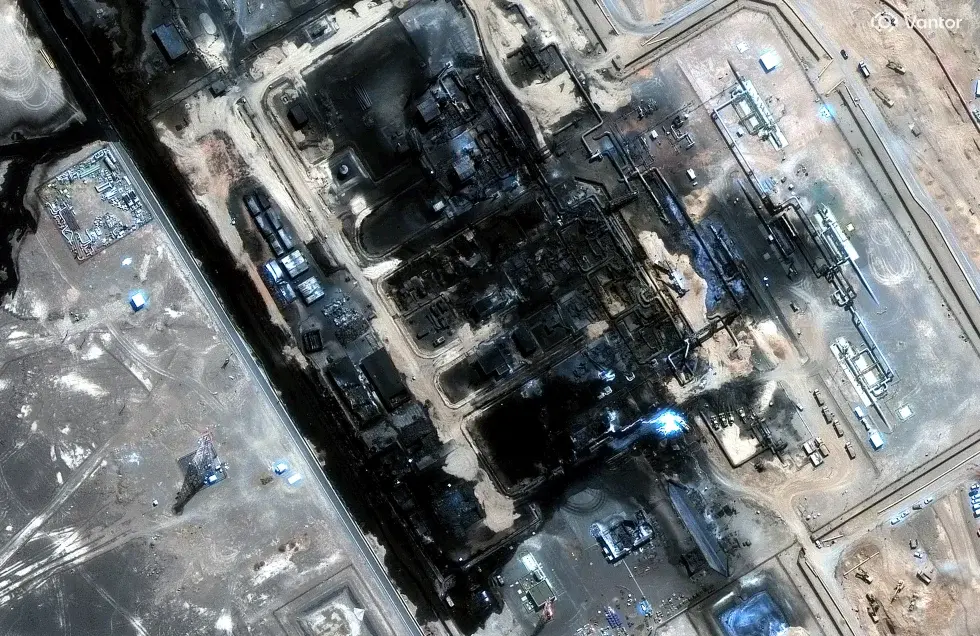
Two officials spoke anonymously to AP indicating that the main pipeline structure would remain mostly out of service for weeks while technical crews conduct structural assessments and replace damaged pumping hardware. Industry sources speaking to Reuters provided varying estimates. One source suggested full repairs could take up to six weeks. However, another insider noted that engineers might achieve a partial restart sooner, resuming limited pumping volumes at reduced pressure while primary repairs continue alongside active operations.
Until Saudi Arabia completes emergency engineering work and verifies structural safety along the length of the conduit, crude throughput will remain severely curtailed.
Sources:
Associated Press. 2026. "What the closure of Saudi Arabia's East-West pipeline could mean for oil flows" September 14. Link
Reuters. 2026. "Saudis shut down oil pipeline as Houthis tighten grip on Red Sea shipping" Septmeber 11. Link
The Guardian. 2026. "Satellite images show extent of damage to major Saudi pipeline, amid global oil supply fears" September 13. Link