Trump and Xi Jinping Summit: Priorities and Outcomes
- Mischa Khanna

- May 20
- 3 min read
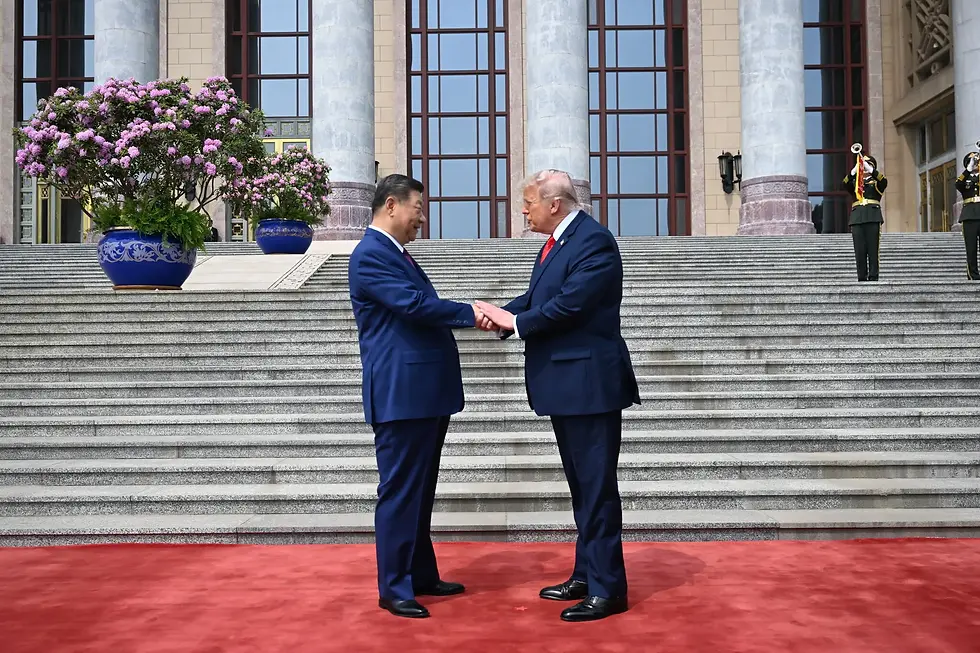
Earlier this week, U.S. President Donald Trump traveled to Beijing for a high stakes summit with Chinese President Xi Jinping. To the international community, the meeting represented a critical juncture for the world’s two largest economies. For both Washington and Beijing, the summit provided a platform to communicate priorities, outline red lines, and reassure global markets.
Diverging Priorities
The official readouts released by Washington and Beijing revealed a pronounced divergence in what each side sought to achieve from the bilateral discussions. This divergence illustrates how both leaders approach the relationship through different lenses.
According to Chinese state media and official briefings, President Xi placed the security status of Taiwan at the center of dialogue. Xi deemed Taiwan issues as the red line, delivering a direct warning that mishandling cross-strait relations could result in direct conflict or a spiral into chaos. This included pushing the Trump administration to reconsider a pending $14 U.S. arms sale to the island. This decision however, has not been finalized.
Conversely, the White House readout and American focus centers almost exclusively on transactional economic objectives, market access, and industrial agreements. The American delegation included Treasury Secretary Scott Bessent, Trade Representative Jamieson Greer and a contingent of prominent corporate executives. This group pressed Beijing for expanded market access for American businesses.
Global Security Concerns
While the bilateral talks focused heavily on the immediate concerns of Washington and Beijing, the outcomes reverberated across South and Southeast Asia. For these smaller and middle-power nations, the mere occurrence of the summit of nearly a year of delayed leader-to-leader contact was an essential baseline indicator of relationship health.
The Council on Foreign Relations reports leaders were deeply disappointed by the lack of deliverables. South and Southeast Asia remain among the global regions most intensely dependent on liquefied natural gas and crude oil. As the summit failed to produce a tangible roadmap to end the conflict or halt Iran’s implementation of maritime transit tolls, these states are facing an energy crisis. Emergency stock piles are running slow and domestic electricity blackouts are becoming frequent. According to the UN Development Program(UNDP) it is estimated the crisis will push roughly 8.8 million people into poverty, threatening hundreds of millions in economic losses.
Market Responses
Immediate market responses were subdued. Reuters reports Chinese stocks were largely flat on Monday after sliding more than 1% on Friday. The Chinese yuan experienced downward pressure, weakening to a near two week low against the U.S. dollar. Analyst note, however, this is not thought to be heavily influenced by the summit’s outcome.
The primary obstacle preventing a stronger market rally is attributed to the ongoing U.S.-Israeli conflict with Iran. Having lasted over two months, the war continues to disrupt global trade routes, most notably around the Strait of Hormuz. Prior to the summit, there were hopes that Trump and Xi Jinping might lay some groundwork for a Middle Eastern peace deal or yield a coordinated effort. However, Beijing refrained from giving any clear signals that it would actively intervene or apply pressure on Iran.
Sources:
Council on Foreign Relations. 2026. "The Trump-Xi Summit: What It Means for Southeast Asia and South Asia" May 19. Link
NPR. 2026. "Key takeaways from Trump's China trip" May 15. Link
Reuters. 2026. "Investors bet on stability after Trump-Xi summit as Iran War concerns linger" May 18. Link
Reuters. 2026. "Trump returns from China with stability and a stalemate" May 16. Link
U.S. Embassy & Consulates in China. "Readout of President Trump's Meeting With Chinese President Xi Jinping" May 15. Link


